
Asphalt Cracks and Surface Wear to Address Before Pennsylvania Freeze-Thaw Weather
Small changes in asphalt can become more consequential once temperatures begin moving above and below freezing. Cracks provide openings for water, while worn or uneven areas may allow moisture to remain on the pavement longer than intended. When that moisture freezes, expands, and thaws repeatedly, existing weaknesses can become more noticeable.
For Pennsylvania property owners, late summer and early fall provide a useful opportunity to look at the condition of a driveway, parking area, or private paved surface before colder weather arrives.
The objective is not to assume that every mark requires the same repair. It is to identify where water is entering, where the surface is losing stability, and whether asphalt driveway maintenance or a more substantial service should be considered.
Why existing asphalt damage matters before winter
Freeze-thaw weather does not create every pavement problem on its own. In many cases, it makes an existing weakness worse.
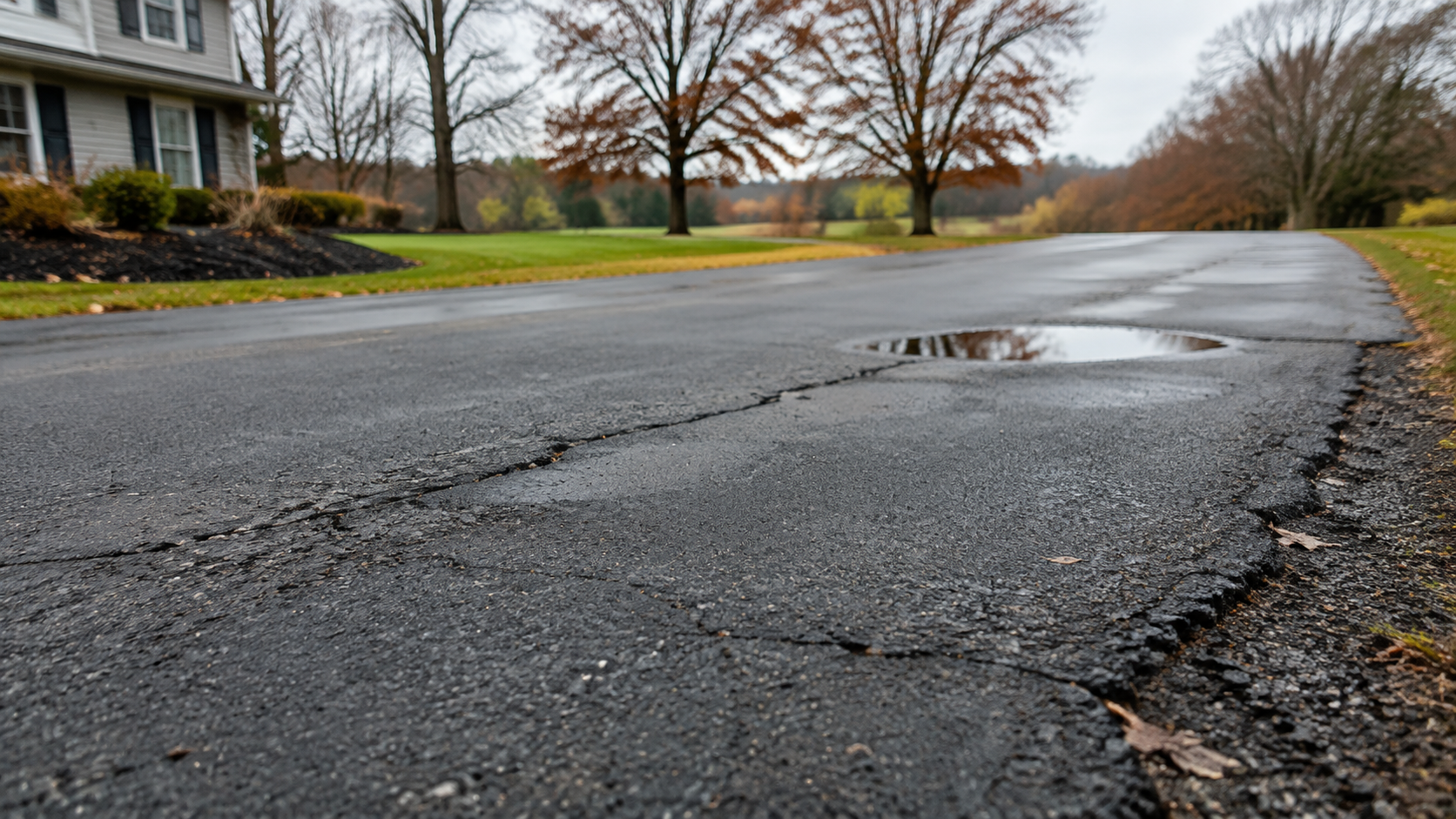
Water can enter open cracks or collect in low areas. When temperatures fall, trapped moisture can freeze and expand. As conditions warm, the ice melts and may leave additional space within or beneath the pavement. Repeated cycles can gradually widen cracks, loosen material, and contribute to uneven areas.
This is why the condition of the pavement before winter matters. A surface with controlled drainage and limited openings generally presents fewer entry points for moisture than asphalt that is already fractured or deteriorating.
Asphalt cracks that deserve attention before freeze-thaw weather
Property owners do not need to diagnose pavement failure themselves, but they can note visible changes and where those changes are occurring.
Cracks that are becoming wider or longer
A crack that has changed since spring or continues extending across the pavement deserves attention. Its growth may indicate continued movement, moisture intrusion, or stress in the surrounding asphalt.
The location also matters. A crack crossing a heavily traveled portion of a driveway may behave differently from a small isolated opening near an area with limited traffic.
Sealcoating should not be treated as a universal crack repair. C.M. Ayres’ existing guidance explains that sealcoating is primarily protective and may not correct deeper or more significant deterioration. Learn what sealcoating can and cannot address.
Connected or alligator-style cracking
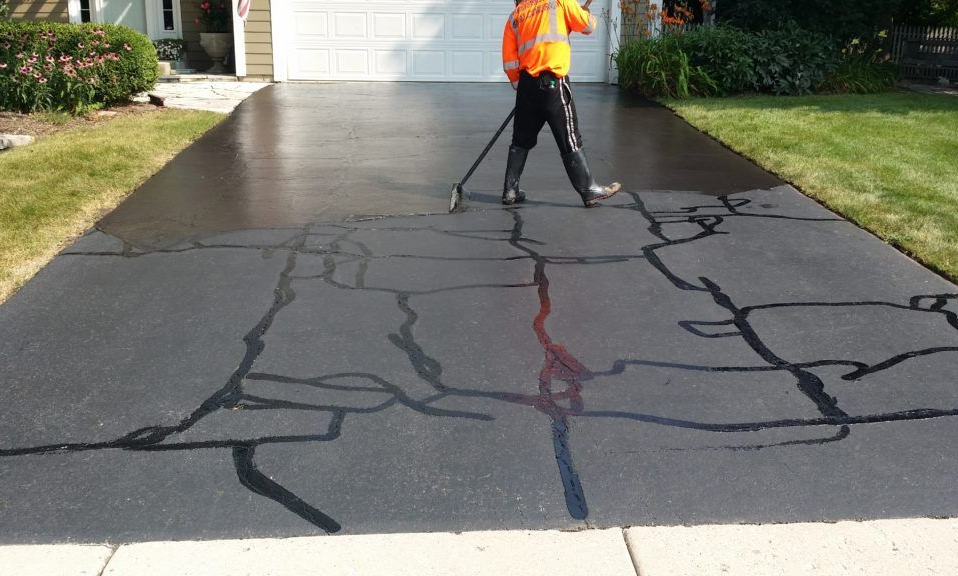
A network of small, interconnected cracks can indicate that the affected area is no longer behaving as one stable surface. Water may enter through multiple openings, while vehicle traffic continues placing pressure on the weakened pavement.
Covering the pattern without identifying why it developed may provide only a temporary cosmetic change. The area may need to be evaluated for problems involving the pavement structure, base, traffic load, or drainage.
Cracks forming along pavement edges
Asphalt edges are especially vulnerable when they lack support or when nearby soil has eroded. Water flowing toward the edge can further weaken the surrounding area.
Before winter, look for broken edges, widening gaps, soil separation, or sections that appear to be settling. These observations can help a paving contractor determine whether the concern is limited to the surface or connected to support and drainage conditions.
Surface wear can be as important as a visible crack
Not every warning sign appears as a single opening. Asphalt may look faded, rough, brittle, or uneven as it ages and remains exposed to sunlight, water, traffic, and seasonal temperature changes.
A rough surface alone does not automatically mean the pavement must be replaced. However, loose aggregate, shallow depressions, worn travel paths, and areas that retain water can reveal where the surface is becoming less effective.
After rainfall, property owners can observe the pavement from a safe location. Water that consistently remains in the same depression or runs directly into cracked sections may indicate that drainage and surface condition should be evaluated together.
Not sure whether the visible wear requires maintenance, repair, or resurfacing?
Schedule a pavement consultation with C.M. Ayres before colder Pennsylvania weather limits the available project window.
When maintenance may not be enough
Preventive maintenance is most useful when the pavement remains structurally suitable for it. If deterioration is widespread, sections are sinking, cracks repeatedly return, or the surface is breaking apart, applying another surface treatment may not address the underlying concern.
In these situations, asphalt driveway resurfacing may be one option considered after the pavement is evaluated. Resurfacing generally involves placing a new asphalt layer over a suitable existing structure, but not every driveway or paved area is a candidate.
The decision depends on the condition of the current pavement, the stability of the base, drainage, elevation constraints, and how the surface is used. A consultation helps determine whether targeted maintenance, resurfacing, or a different scope is appropriate.
Does every asphalt crack need immediate repair?
Not every line in asphalt represents the same urgency, but open or changing cracks should not be ignored simply because winter has not arrived.
A stable hairline opening may require a different response from a widening crack, a fractured section, or pavement that moves under vehicle traffic. Location, depth, surrounding wear, drainage, and previous repair history all influence the recommendation.
Rather than selecting a treatment based only on appearance, document the affected areas and request an evaluation when damage is spreading or interfering with normal use.
What to review around the damaged pavement
The asphalt surface is only part of the picture. Observe where roof runoff, slopes, downspouts, drains, and adjoining surfaces direct water. Moisture repeatedly flowing toward a crack or low spot can continue affecting the same area even after a surface repair.
Property owners should also note:
- Areas where water remains after surrounding pavement dries
- Sections that feel uneven when driving or walking across them
- Crumbling material near pavement edges
- Previous repairs that are separating from the original asphalt
These observations give the contractor useful context without requiring the property owner to determine the cause.
Plan the repair around pavement condition and weather
Asphalt services depend on surface conditions, material requirements, temperatures, and the scope of work. Waiting until freezing weather begins may reduce the options available for completing certain projects under suitable conditions.
An early evaluation creates time to determine priorities. Some areas may benefit from preventive maintenance, while others may require more substantial preparation or repair. Commercial properties may also need to coordinate the work around vehicle access, deliveries, customers, or pavement markings.
C.M. Ayres provides residential and commercial pavement maintenance services for property owners planning around operational and seasonal demands.
Prepare your asphalt before Pennsylvania temperatures begin changing
Cracks and surface wear do not all require the same solution. What matters is whether the damage is allowing water into the pavement, affecting safe use, or showing signs of continued movement.
C.M. Ayres can evaluate the visible condition, drainage patterns, pavement use, and previous repairs before recommending the appropriate scope.
Contact C.M. Ayres to request an estimate to discuss your asphalt project and confirm service availability for your Pennsylvania property.