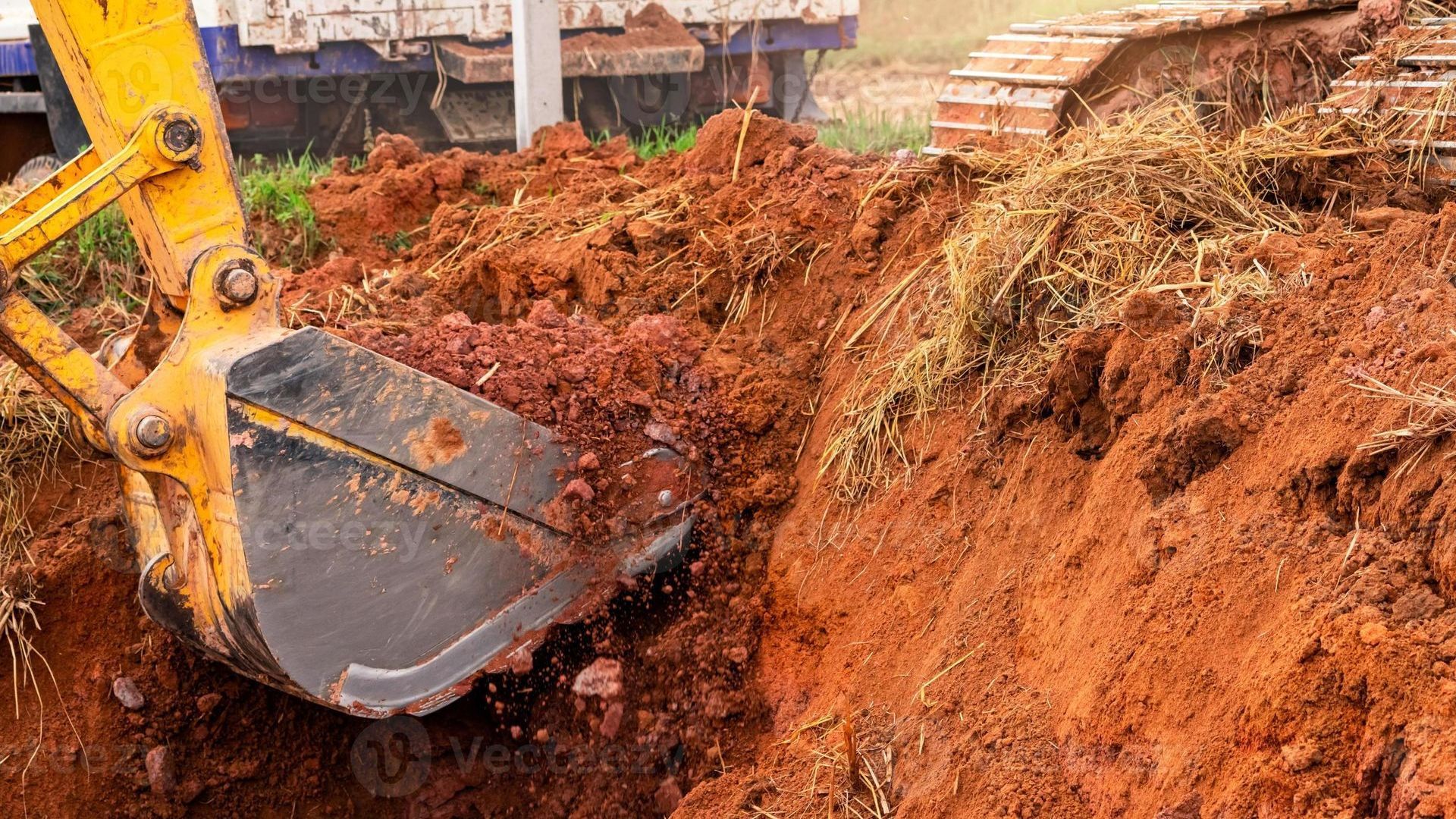

What we evaluate during winter before a spring asphalt driveway installation
Spring may be the season when many Baltimore County homeowners want their new driveways installed, but the most important decisions can begin months earlier.
At C.M. Ayres, we use the planning period to understand how the driveway must function, evaluate the existing pavement and determine what preparation may be required beneath the new asphalt. Starting this process during winter gives homeowners time to review the proposed scope, address financing and prepare for construction without making every decision immediately before paving season.
A winter consultation does not mean asphalt will be installed under unsuitable conditions. It allows us to develop a property-specific plan so the project can move forward when the weather, ground conditions and schedule are appropriate.
For homeowners considering asphalt driveway installation in Baltimore County, here is what we evaluate before preparing an estimate.
We begin with how the driveway needs to function
Before discussing asphalt thickness or construction equipment, we need to understand how the property is used.
A driveway serving one or two household vehicles has different requirements from a longer driveway that regularly supports delivery trucks, trailers, work vehicles or recreational equipment. The layout may also need to provide guest parking, access to a detached garage or room for vehicles to turn around safely.
During the initial conversation, we discuss what works about the current driveway and what needs to improve. Common objectives include:
- Creating additional parking
- Improving access to a garage
- Replacing deteriorated pavement
- Correcting an awkward vehicle approach
- Connecting the driveway with another paved area
- Improving water movement around the property
These priorities help us evaluate more than the existing footprint. If a wider entrance, parking pad or turnaround would make the driveway more functional, that improvement should be considered before the construction plan is finalized.
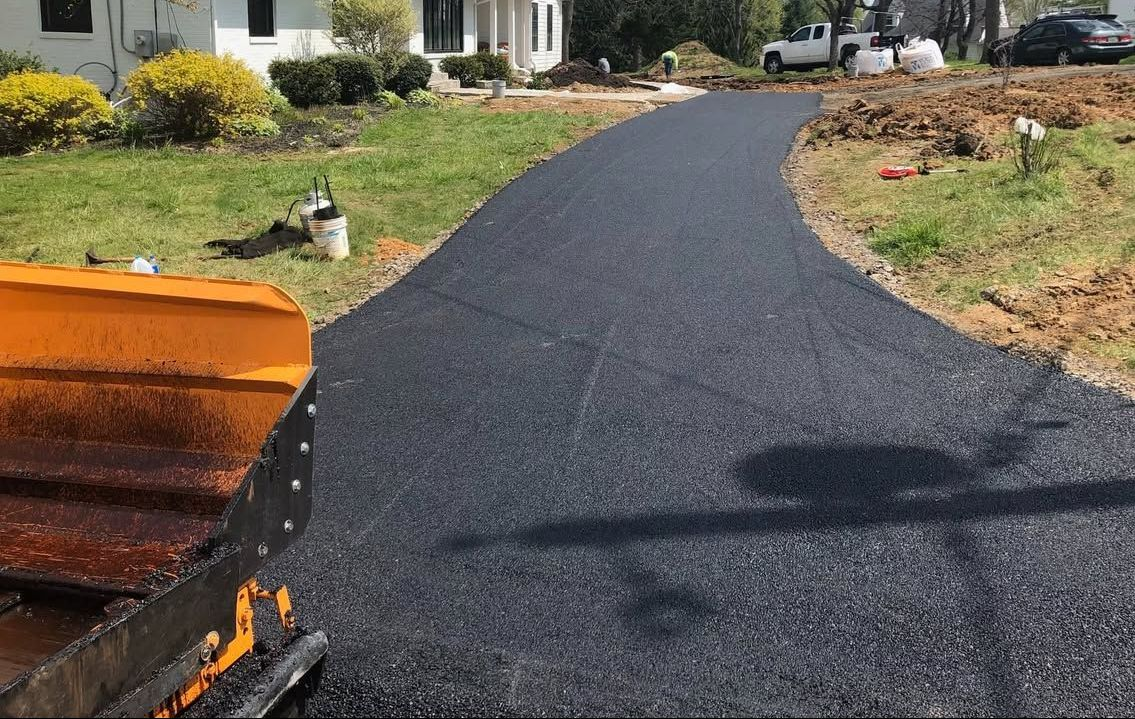
Our residential paving services include new driveway installation, replacement, resurfacing and related site preparation.
Winter can reveal drainage patterns that matter in spring
Water is one of the first conditions we consider during a driveway evaluation.
Seasonal rain, melting snow and freeze-thaw conditions can make low areas, saturated edges and runoff paths easier to recognize. Homeowners may notice water collecting near the garage, traveling along the driveway perimeter or entering from a higher section of the yard.
Those observations are valuable because new asphalt should not simply cover an unresolved drainage problem.
We evaluate the driveway’s relationship with the home, garage, road, lawn and nearby slopes. Roof downspouts and adjoining paved surfaces may also influence where water travels.
Our objective is to determine how the completed driveway should be graded and where runoff can move without creating another problem elsewhere on the property.
A homeowner does not need to wait for a rainy day to request an estimate. Photographs showing previous water accumulation can help us understand conditions that may not be visible during the site visit.
For more detail, review our article about driveway grading and drainage before asphalt paving.
We determine whether the existing pavement should be removed
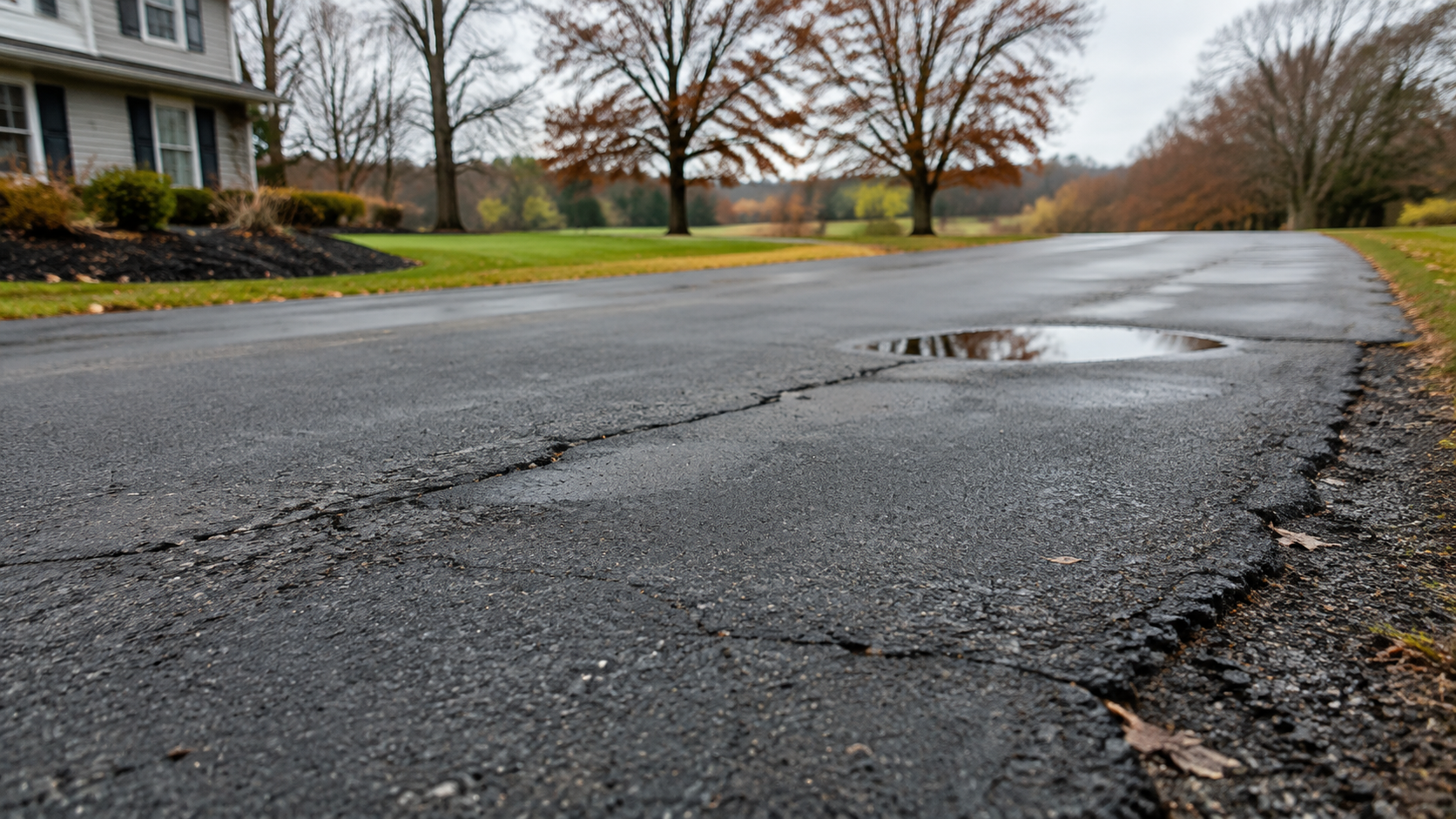
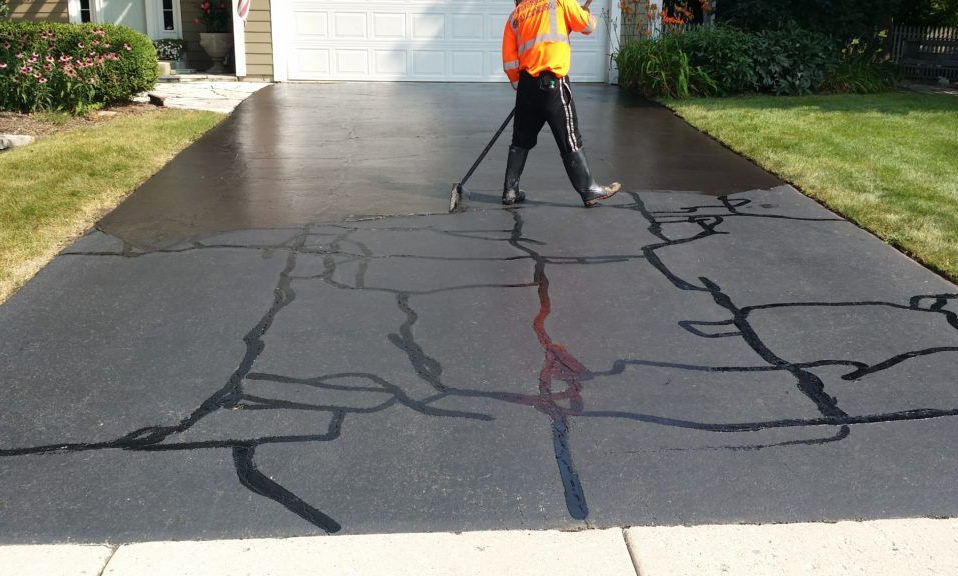
An older asphalt driveway does not automatically require complete reconstruction. However, placing new asphalt over an unsuitable surface will not correct failures in the pavement or base below it.
During the site evaluation, we examine the type and extent of visible deterioration. Isolated surface wear creates a different scope from widespread cracking, settlement, movement or recurring depressions.
When an existing surface may remain
If the pavement structure remains stable and the existing elevations allow an appropriate result, resurfacing may be considered.
The evaluation must account for more than appearance. Adding another asphalt layer raises the finished elevation, which can affect garage thresholds, walkways, drainage and the connection with the road.
When removal may be necessary
Removal may be more appropriate when the existing driveway has structural deterioration, unsuitable elevations or sections that have failed repeatedly.
Taking out the old pavement also allows the underlying material to be evaluated more directly. The estimate should identify whether removal and disposal are included and how unexpected base conditions will be handled.
Our article about choosing between asphalt repair and full replacement explains why the condition beneath visible damage matters.
The foundation beneath the asphalt shapes the project
A finished driveway depends on the support below its surface.
During winter planning, we look for indications that the subgrade or aggregate base may need attention. Settlement, soft areas, edge failure and repeated cracking can suggest that the existing foundation has not remained stable.
The full condition of the base may not be visible until removal or excavation begins. For that reason, a responsible estimate should explain what preparation is included and how concealed conditions will be documented.
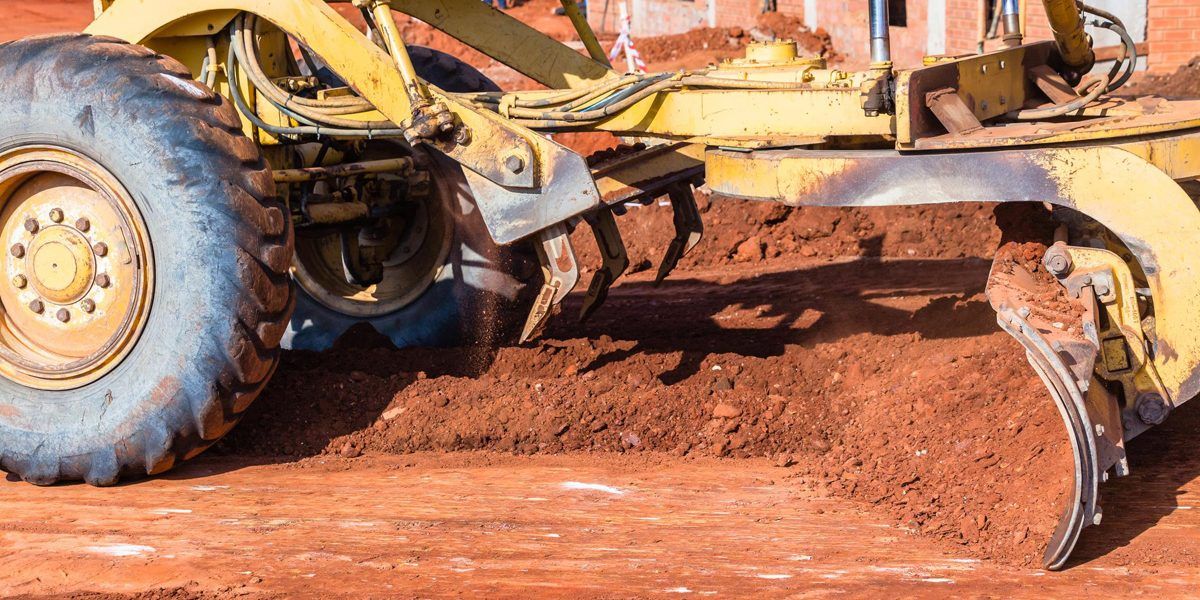
Where additional preparation is required, the work may involve removing unsuitable material, correcting elevations and installing compacted aggregate before paving.
C.M. Ayres provides stone base installation for projects requiring a stable, properly graded foundation. Base preparation is not the most visible part of a new driveway, but it is one of the most important parts of the construction scope.
We evaluate equipment and material access
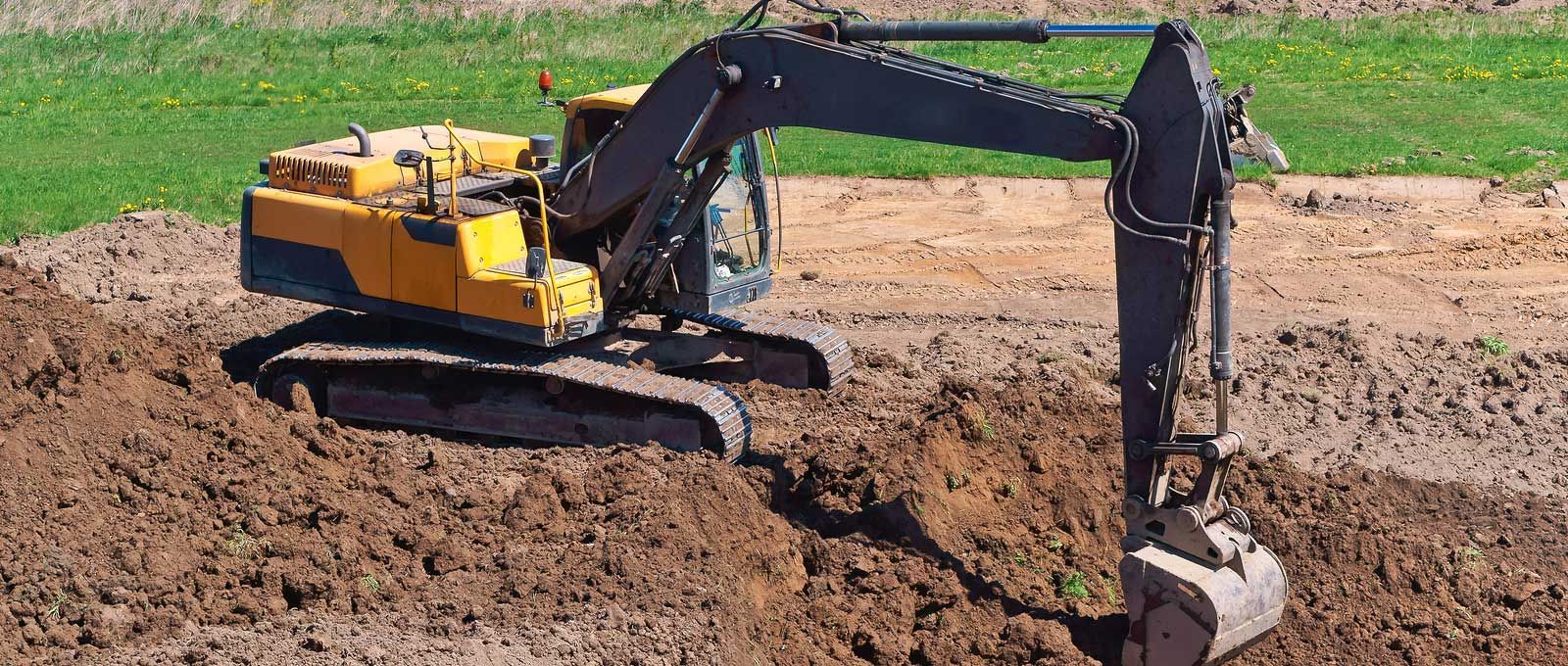
Driveway installation requires more working room than the final paved surface occupies. Trucks must deliver materials, equipment must reach the construction area and removed pavement or soil may need to leave the property. Narrow entrances, fences, gates, mature landscaping and overhead obstructions can affect how the work is completed.
We also consider whether the driveway provides the only access to the home. If so, the homeowner needs to understand when vehicles must be moved and how long normal access may be restricted.
Reviewing these conditions during winter gives the household time to plan around work schedules, deliveries, school transportation and other daily needs.
We examine every transition around the driveway
The new pavement must connect properly with the surfaces around it.
Garage floors, public roads, sidewalks, walkways and existing parking areas may all sit at different elevations. These transitions affect vehicle movement, drainage and the finished appearance of the driveway.
A higher asphalt surface is not always an improvement. If the finished elevation is too high near a garage or walkway, water may move in the wrong direction or an uncomfortable edge may be created.
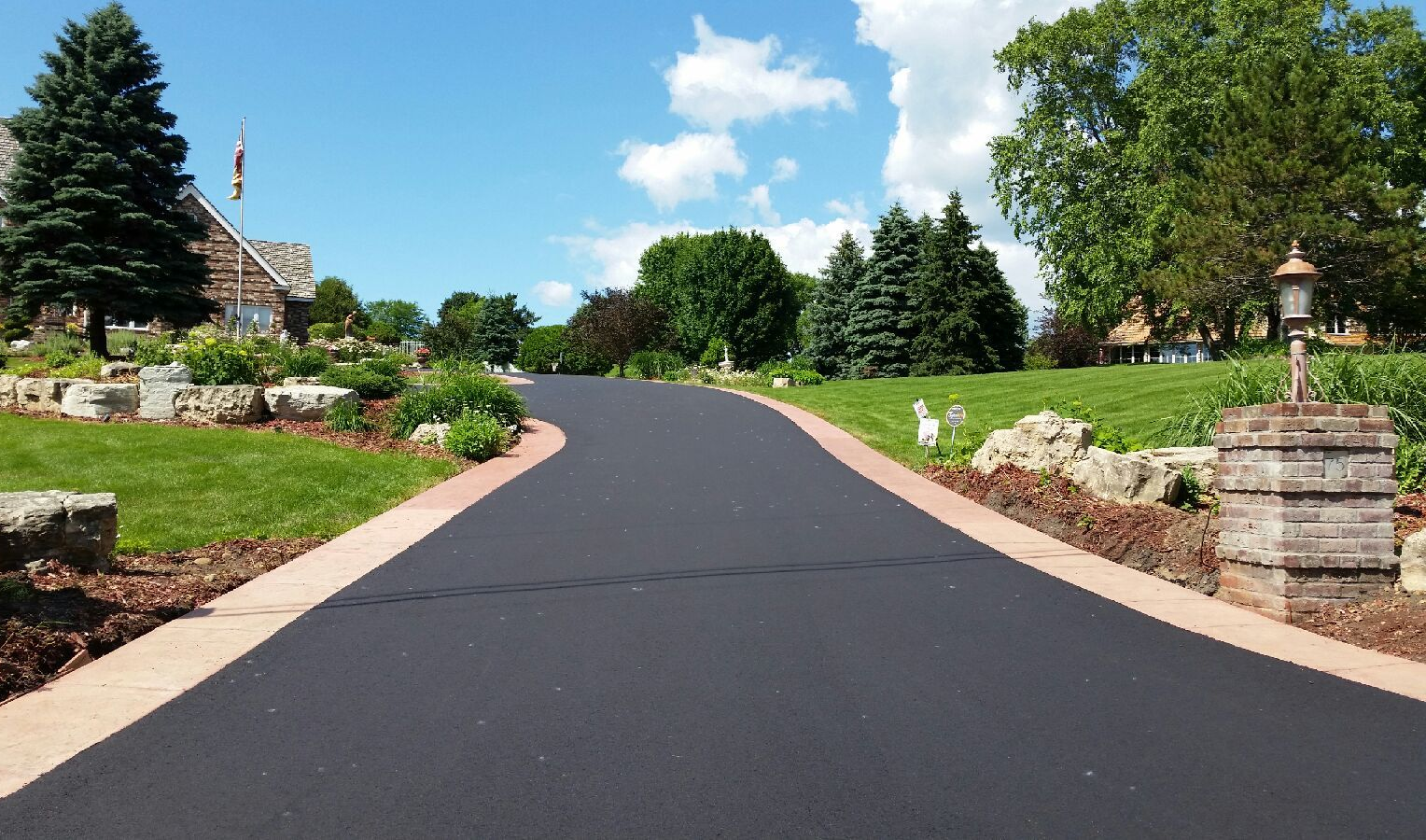
During the evaluation, we determine which transitions are included and where more detailed grading may be needed. If borders or other materials will be installed beside the driveway, they should be considered before the final dimensions are approved.
Planning an asphalt driveway installation for spring?
Request a site evaluation from C.M. Ayres
Winter planning helps produce a clearer estimate
A driveway estimate should describe the work being proposed for the specific property.
The total investment can be influenced by the driveway’s dimensions, demolition requirements, excavation, grading, stone-base preparation, asphalt installation and construction access. Drainage improvements and transitions can also affect the scope.
We want homeowners to understand what is included before approving the project. A useful proposal should identify:
- The area included in the project
- Removal or demolition responsibilities
- Expected grading and base preparation
- Asphalt installation
- Edge and transition details
- Cleanup responsibilities
- How additional conditions will be documented
Comparing estimates only by total price can hide important differences. One contractor may include removal and substantial base preparation, while another proposal may assume that the existing foundation can remain.
The better comparison is between complete scopes—not simply the final numbers.
Planning early does not lock the installation to a specific day
Maryland weather does not follow a fixed construction calendar. A warmer week does not automatically mean every property is ready for paving, and a preliminary spring timeframe should not be treated as a guaranteed installation date.
Before work begins, we consider weather, site conditions, material availability and the approved project scope. Excavation and base preparation may also need to be coordinated differently from asphalt placement.
Beginning the conversation during winter gives us time to complete the evaluation and prepare the proposal. The actual construction schedule can then be confirmed when the project is approved and appropriate conditions are available.
Financing can be reviewed before the paving season
Driveway replacement is a significant property investment, particularly when the project includes removal, excavation, drainage corrections or extensive base preparation.
Homeowners who are considering financing should review that option while evaluating the project—not after construction is ready to begin.
C.M. Ayres offers access to financing options for qualifying paving projects. Reviewing the estimated scope first helps homeowners understand what the financing needs to cover and whether the proposed work reflects their priorities.
Financing availability does not replace a complete evaluation. The property conditions and construction requirements should still determine the scope.
What homeowners can prepare before the site visit
Homeowners do not need technical measurements or a finished driveway design before contacting us.
It is helpful to identify where water collects, which pavement areas have failed repeatedly and how vehicles currently use the space. Photographs taken after rain or during winter conditions may provide additional context.
Tell us about future improvements that could affect the driveway, including a garage, addition, walkway, gate or expanded parking area. Planning around those improvements may reduce the likelihood that recently completed pavement will need to be altered later.
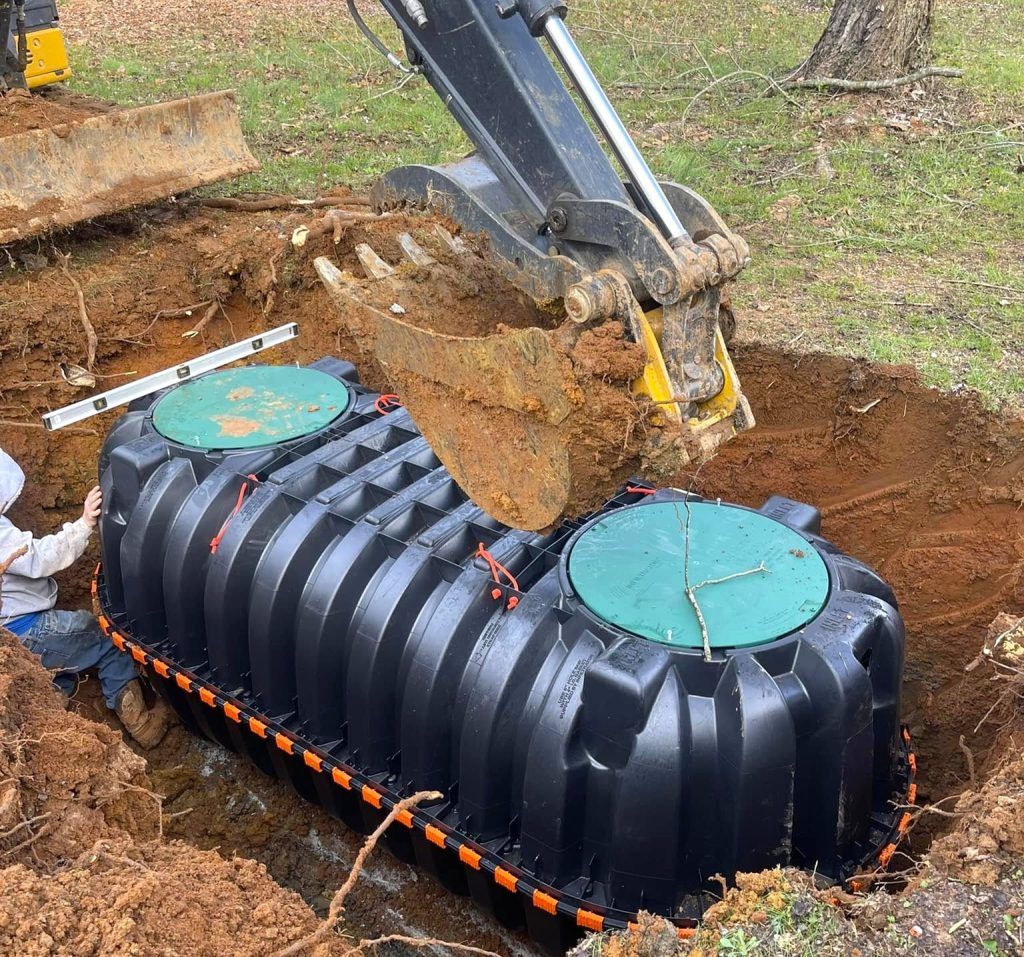
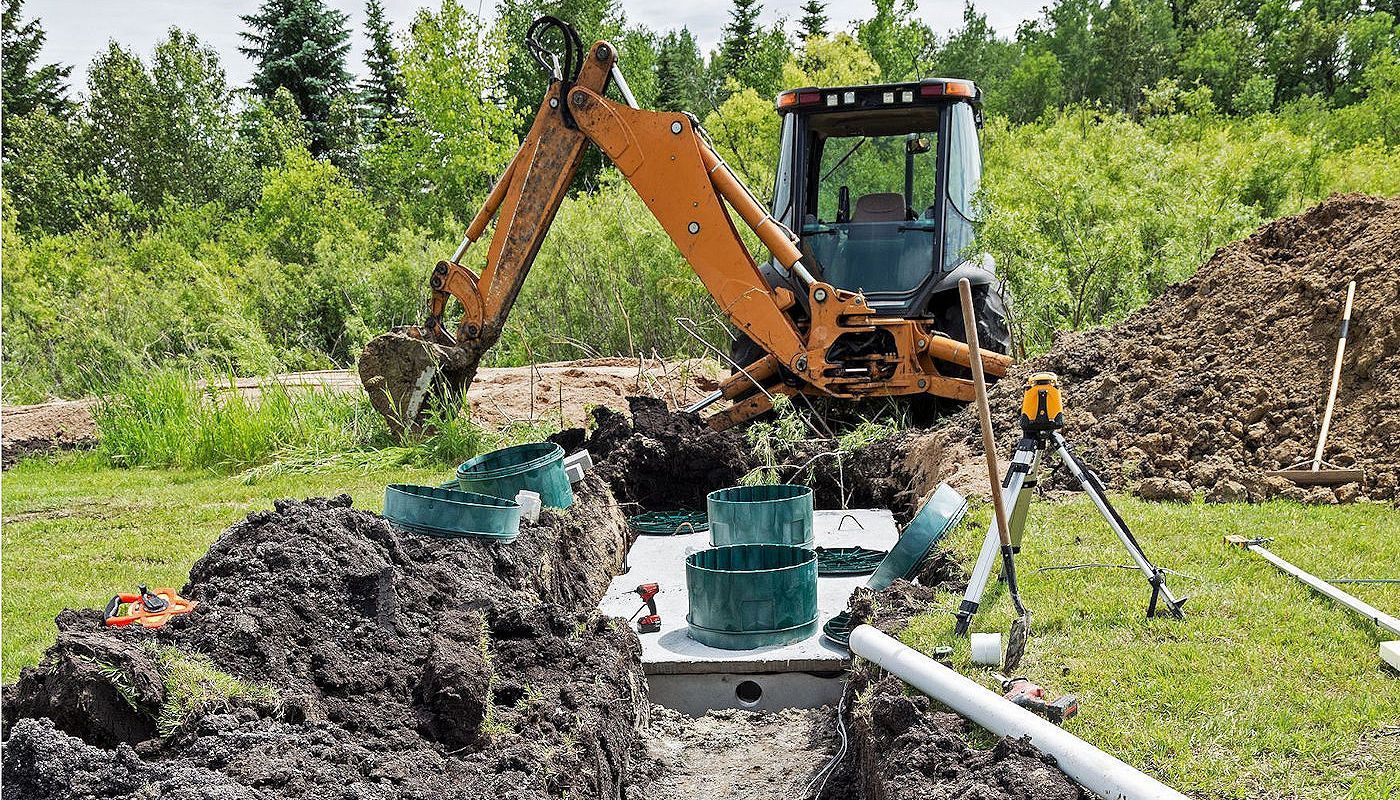
You should also mention underground or property features you know about, such as septic components, drainage lines, irrigation or utility areas. We can then determine which information must be confirmed before construction.
Why early planning creates a better spring project
Waiting until the desired installation period to begin planning can compress several important decisions.
The property still needs to be evaluated, the project boundaries must be confirmed and the estimate must be reviewed. If drainage, access or base preparation requires a larger scope than expected, the homeowner may need additional time to consider the recommendation.
Winter planning separates those decisions from the installation itself. It gives homeowners an opportunity to understand the project, arrange financing when needed and prepare the property before construction activity increases in spring.
The result is not simply an earlier place on a calendar. It is a clearer plan based on the conditions that will shape the finished driveway.
Plan your spring asphalt driveway with C.M. Ayres
At C.M. Ayres, we know that a strong asphalt driveway begins before the first load of material arrives.
We evaluate how the driveway will be used, how water moves across the property, what condition exists beneath the current surface and how our equipment will access the site. Those findings help us develop a scope that addresses the complete project rather than only the visible asphalt.
We provide asphalt driveway installation and residential paving services throughout Baltimore County and surrounding Maryland communities.
Related driveway planning resources