
Planning a spring commercial parking lot paving project during winter
A commercial parking lot paving project should begin well before asphalt equipment arrives at the property. The existing pavement must be evaluated, the intended scope defined and the work coordinated around employees, customers, tenants, deliveries and normal business operations.
At C.M. Ayres, we use the winter planning period to help Maryland property owners prepare for spring paving. Although actual installation depends on appropriate weather and site conditions, evaluation, measurement, budgeting and operational planning can begin earlier.
Starting during winter gives owners and property managers time to understand whether the project requires maintenance, resurfacing, milling, base reconstruction or complete replacement. It also creates an opportunity to secure internal approvals and prepare a realistic construction schedule before the busiest portion of paving season.
For businesses considering commercial parking lot paving in Maryland, early planning produces a more clearly defined project and reduces avoidable decisions once work is ready to begin.
Winter reveals how the parking lot is performing
A parking lot may look serviceable during dry weather but behave differently when exposed to rain, freezing temperatures and regular winter traffic.
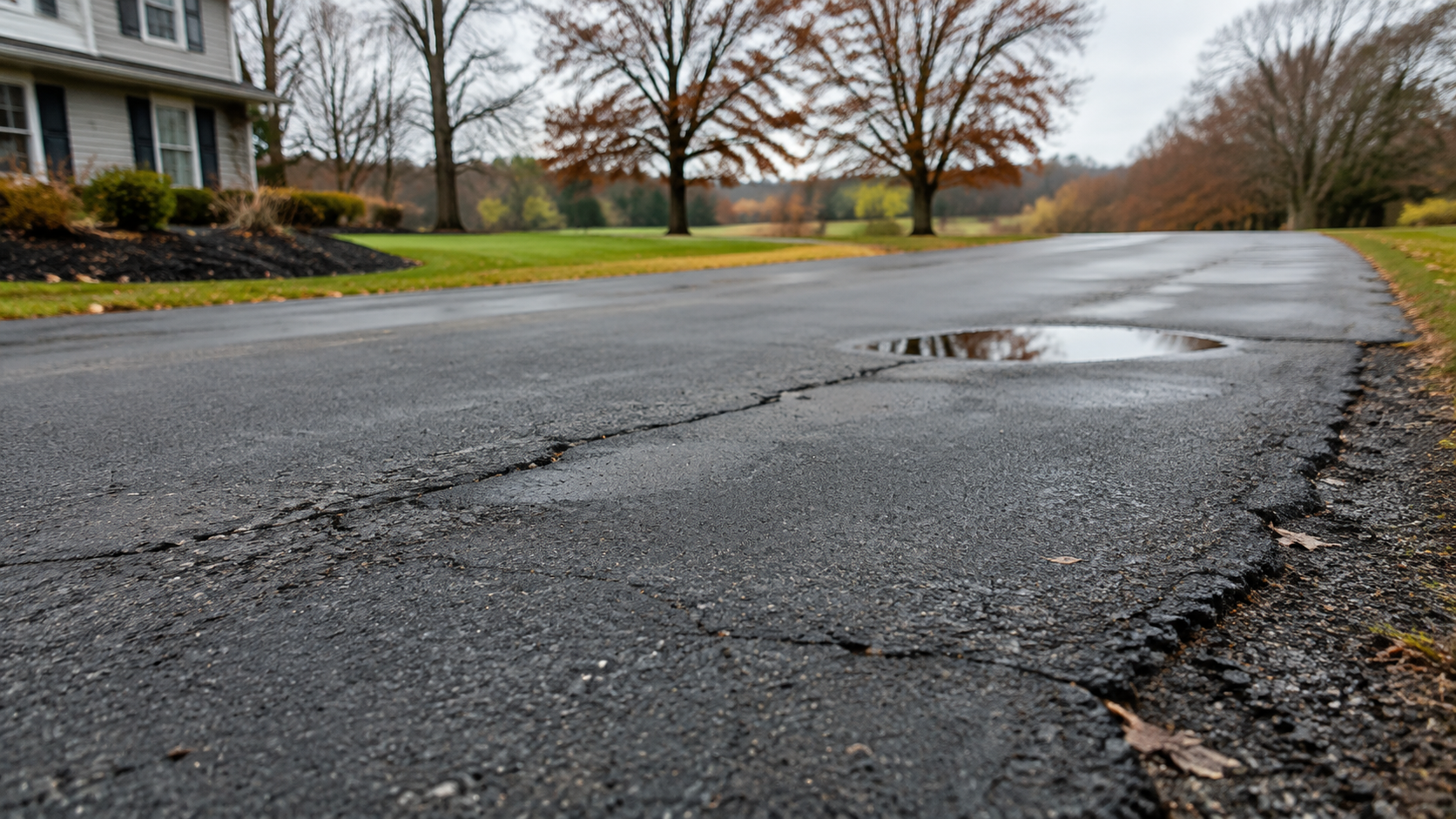
Water collecting in low areas, movement around drains and deterioration along pavement edges can help identify conditions that deserve closer evaluation. Repeated vehicle loads may also make depressions, unstable sections or deteriorated transitions more noticeable.
We do not assume that every visible crack requires complete pavement replacement. Surface deterioration can have several causes, and the appropriate recommendation depends on the depth and extent of the problem.
During a commercial site evaluation, we consider how the pavement is performing as a complete system. That includes the surface, underlying support, grading, drainage and the way vehicles use the property.
Define how the property uses its pavement
Commercial parking lots are not all exposed to the same traffic.
An office property may primarily serve employee and visitor vehicles. A retail location can experience frequent turning, short parking cycles and continuous customer movement. An industrial or service property may need to support delivery trucks, equipment and heavier vehicle loads.
These differences influence the paving scope.
At C.M. Ayres, we review entrance lanes, parking rows, loading areas, dumpster access, turning zones and other high-use sections separately. A parking lot does not always deteriorate evenly, and each area may require a different level of preparation.
Understanding the traffic pattern also helps us determine whether the project can be completed in one phase or whether the business needs continued access to part of the property.
Determine which paving approach fits the property
A winter evaluation gives us time to distinguish surface-level wear from conditions that may require more extensive work.
Asphalt maintenance and localized repairs
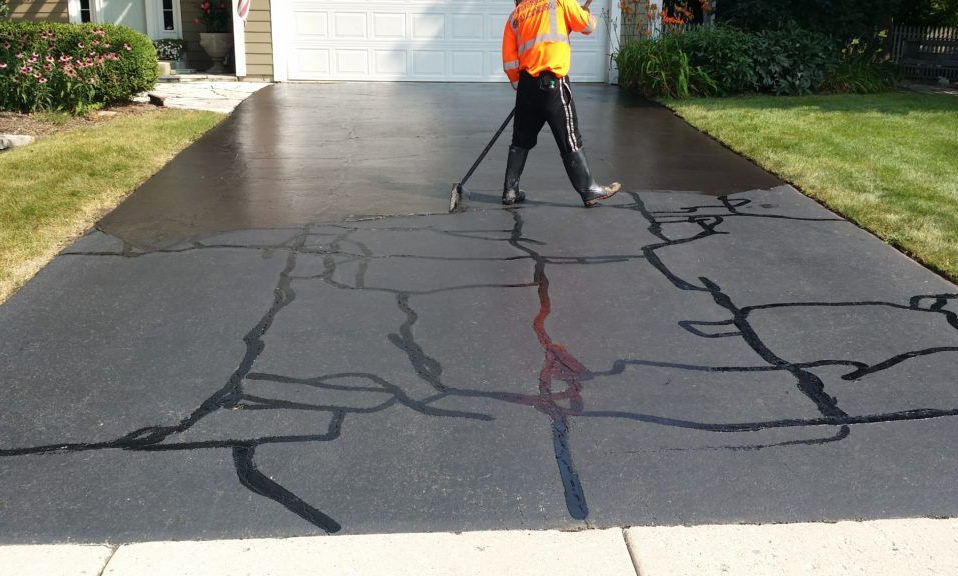
Maintenance or targeted repairs may be appropriate when the overall pavement structure remains serviceable and deterioration is limited to defined areas.
This approach can address specific concerns without rebuilding pavement that is still performing properly. The evaluation must still account for drainage and base stability so the repaired area is not placed over an unresolved condition.
Parking lot resurfacing
Resurfacing installs a new asphalt layer over a suitable existing pavement structure. It can restore a smoother, more consistent surface without complete reconstruction.
The existing pavement must be capable of supporting the improvement. Resurfacing is not intended to conceal widespread movement, failed base material or drainage problems.
Before recommending this option, we evaluate elevations, surface condition and the transitions to curbs, drains and adjoining pavement.
Milling and reclamation
Milling removes selected asphalt material to prepare the surface for new pavement or correct elevations. Reclamation can incorporate existing pavement into a renewed base when broader structural rehabilitation is required.
C.M. Ayres provides asphalt milling and reclamation for commercial properties that need more than a surface-level improvement.
These methods can be valuable for larger parking lots, access roads and high-use areas, but the recommendation must be based on actual site conditions.
Complete pavement replacement
Replacement may be appropriate when deterioration is widespread, the base no longer provides stable support or the parking lot requires significant layout and drainage changes.
Complete replacement provides an opportunity to address the pavement structure rather than continuing to correct recurring surface symptoms.
The proposal should identify which areas require reconstruction and whether any sections of the existing pavement can remain.
Evaluate grading and drainage before paving
Water management is one of the most important parts of commercial pavement planning. A smooth parking lot can still perform poorly if water remains in depressions, flows toward a building or repeatedly enters weakened pavement edges. Drainage problems can also affect pedestrian areas, loading zones and entrances.
During the evaluation, we consider how water reaches the parking lot and where it moves after rainfall or snowmelt. Roof drains, neighboring higher ground, curbs and existing inlets can all influence the plan.
If the property needs grading changes, drain adjustments or base correction, those requirements should be included before the paving scope is approved.
Addressing drainage during winter planning gives the property owner time to review a complete solution rather than discovering after paving that the same low area still collects water.
Understand the condition of the stone base
The asphalt surface depends on the material beneath it.
Soft areas, repeated depressions and sections that move under traffic can indicate that the base requires closer evaluation. Installing new asphalt over unstable support may allow the same problems to return through the finished surface.
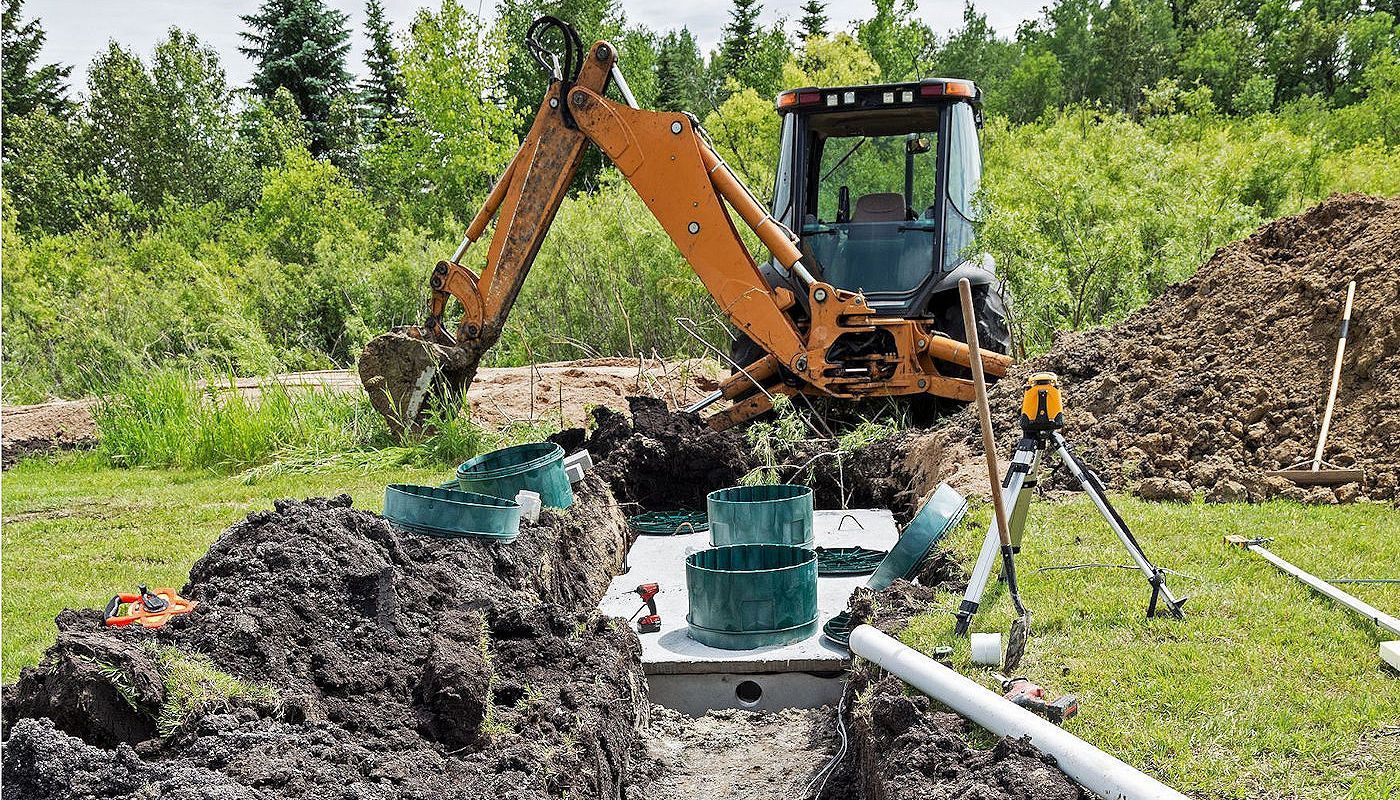
C.M. Ayres provides commercial stone-base installation when a parking lot, access road or commercial drive requires a stronger foundation.
The required preparation depends on soil conditions, traffic demands and the type of pavement being installed. We define that work as part of the proposal instead of treating base preparation as an unspecified allowance.
Review curbs, gutters and pavement transitions
A parking lot connects with more than parking spaces. Curbs, gutters, sidewalks, entrances, loading areas and public-road transitions all affect the final paving elevations.
If new pavement changes the height of the surface, those connections must be considered in advance. Drainage structures still need to receive water, curbs must remain functional and entrances should provide a suitable transition for vehicles.
Winter planning gives us time to identify which adjoining features are included and which will remain.
Property owners considering related improvements can review C.M. Ayres’ curb and gutter services for commercial and paved areas.
Planning commercial parking lot paving or resurfacing for spring?
Schedule a commercial site evaluation with C.M. Ayres
Use winter to establish an accurate project scope
A commercial paving estimate should describe more than the total square footage.
Two parking lots of similar size can require very different preparation. One may have a stable base and straightforward access, while another needs milling, drainage corrections or phased construction.
Our evaluation considers:
- Areas included in the project
- Existing pavement and base conditions
- Traffic type and expected vehicle loads
- Drainage and grading requirements
- Milling, removal or reclamation needs
- Asphalt installation and compaction
- Pavement markings and final transitions
- Equipment access and material staging
A defined scope gives decision-makers a more reliable basis for comparing proposals. It also reduces the risk of comparing a surface-only estimate with one that includes the preparation required for long-term performance.
Plan the project around business operations
Commercial paving affects how people enter, park, receive deliveries and move through the property.
Before scheduling, we need to understand which entrances must remain open, when customer traffic is highest and whether emergency, service or delivery access must be maintained.
Single-phase construction
Completing the project in one phase can reduce the overall construction period, but it generally requires the parking lot or work area to remain unavailable during key portions of the project.
This approach may work for properties that can temporarily close the area, redirect vehicles or use an alternative parking location.
Phased commercial paving
Phased construction allows selected sections to remain accessible while work proceeds elsewhere.
The sequence must account for equipment movement, asphalt delivery and the safe separation of active construction from vehicles and pedestrians. Each completed phase must also connect correctly with the next section.
Planning these phases during winter allows the property manager to communicate upcoming access changes to employees, tenants and customers before work begins.
Coordinate paving with tenants and other vendors
Multi-tenant properties often require more advance communication than owner-occupied facilities.
Tenants may have different operating hours, delivery schedules and customer-access needs. Property managers should identify these requirements before the paving schedule is approved.
The project may also involve pavement-marking companies, landscapers, drainage contractors or utility providers. Their work should be coordinated with the paving sequence.
Fresh pavement should not be disrupted because another contractor needs access to a utility or construction area that could have been addressed beforehand.
C.M. Ayres provides construction project management and site-evaluation services that help connect paving requirements with the broader property plan.
Decide how pavement markings will be restored
Parking-space lines, directional arrows, loading zones and other markings affect how the completed lot functions.
The existing layout should be reviewed before paving. Winter planning gives the property owner time to determine whether the same configuration will return or whether the layout needs operational changes.
C.M. Ayres provides commercial pavement maintenance and marking services for parking lots and other high-traffic paved areas.
The final proposal should clarify whether markings are included, when they will be applied and how the lot will remain restricted until the work is ready for use.
Prepare the budget and approval process before spring
Commercial paving projects may require approval from an ownership group, association, corporate office or property-management team.
Waiting until paving conditions improve to begin that process can delay the project into a busier part of the season.
A winter site evaluation gives the decision-makers time to review the scope, clarify responsibilities and determine how the project will be funded. It also creates space to evaluate whether the work will be completed at once or divided into planned phases.
If the organization requires several proposals, each one should be compared using the same project boundaries and operational requirements. A lower price may reflect a different level of excavation, base preparation, traffic control or restoration.
Schedule paving according to suitable conditions
Winter is useful for planning, but asphalt installation must still account for temperature, weather, site conditions and material transportation.
We do not select an installation date based only on the calendar. The project schedule must support proper placement and compaction while allowing the site preparation to proceed under appropriate conditions.
Beginning the conversation during winter does not mean paving will occur immediately. It means the measurements, scope, budget and operational plan can be ready when conditions support the approved work.
C.M. Ayres will explain the expected scheduling process and communicate when the project date can be confirmed.
Prepare the property before construction begins
Once the project is scheduled, the property manager should ensure that vehicles, stored materials and portable equipment are removed from the work area.
Access gates, loading instructions and designated staging areas should be confirmed. Tenants and employees also need clear information about temporary parking and entrance changes.
If utility covers, drains, lighting bases or other fixed features are located within the project area, they should be identified before construction begins.
Good site preparation allows the crew to focus on the paving work instead of resolving preventable access conflicts.
Complete a final commercial pavement review
After paving and related work are complete, the property representative should review the finished area against the approved scope.
The final review should include pavement transitions, drainage locations, curbs, edges, entrances and markings. The contractor should also explain when vehicles can return and whether any temporary restrictions apply.
Keep the estimate, approved changes, final invoice and maintenance information with the property records. These documents can support future maintenance decisions and help the next property manager understand what work was completed.
Plan your Maryland commercial paving project with C.M. Ayres
A successful commercial paving project begins with understanding how the property functions and what the existing pavement requires.
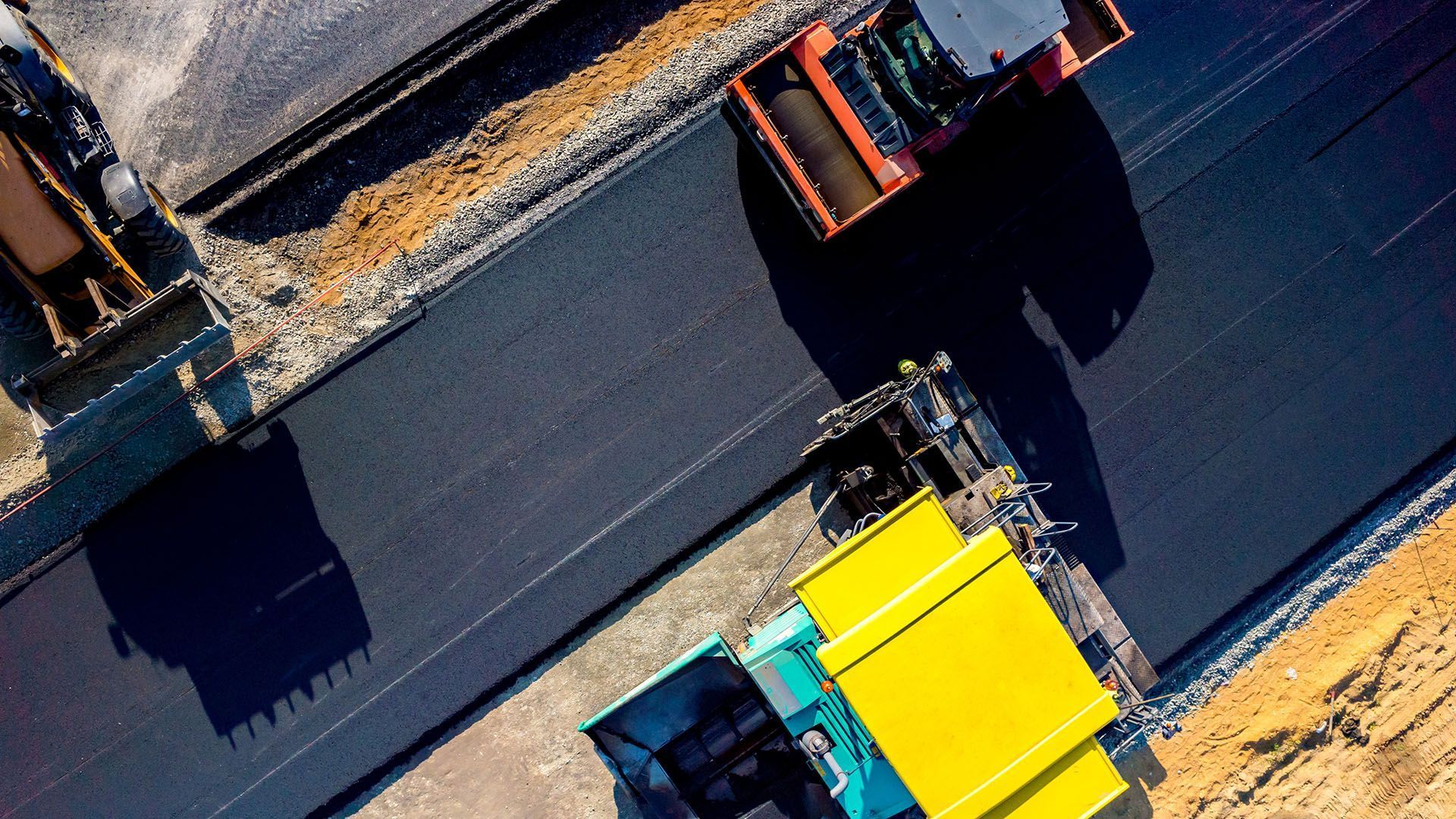
At C.M. Ayres, we evaluate traffic, drainage, base conditions, access and business operations before recommending a paving approach. Our commercial asphalt paving services include parking lots, access roads, drive lanes and other high-use surfaces throughout Maryland.
Planning during winter gives property owners time to define the project, prepare the budget and coordinate access before spring paving schedules become more active.
Request a commercial paving estimate from C.M. Ayres
Related commercial paving resources